

 Loading...


Lubricators
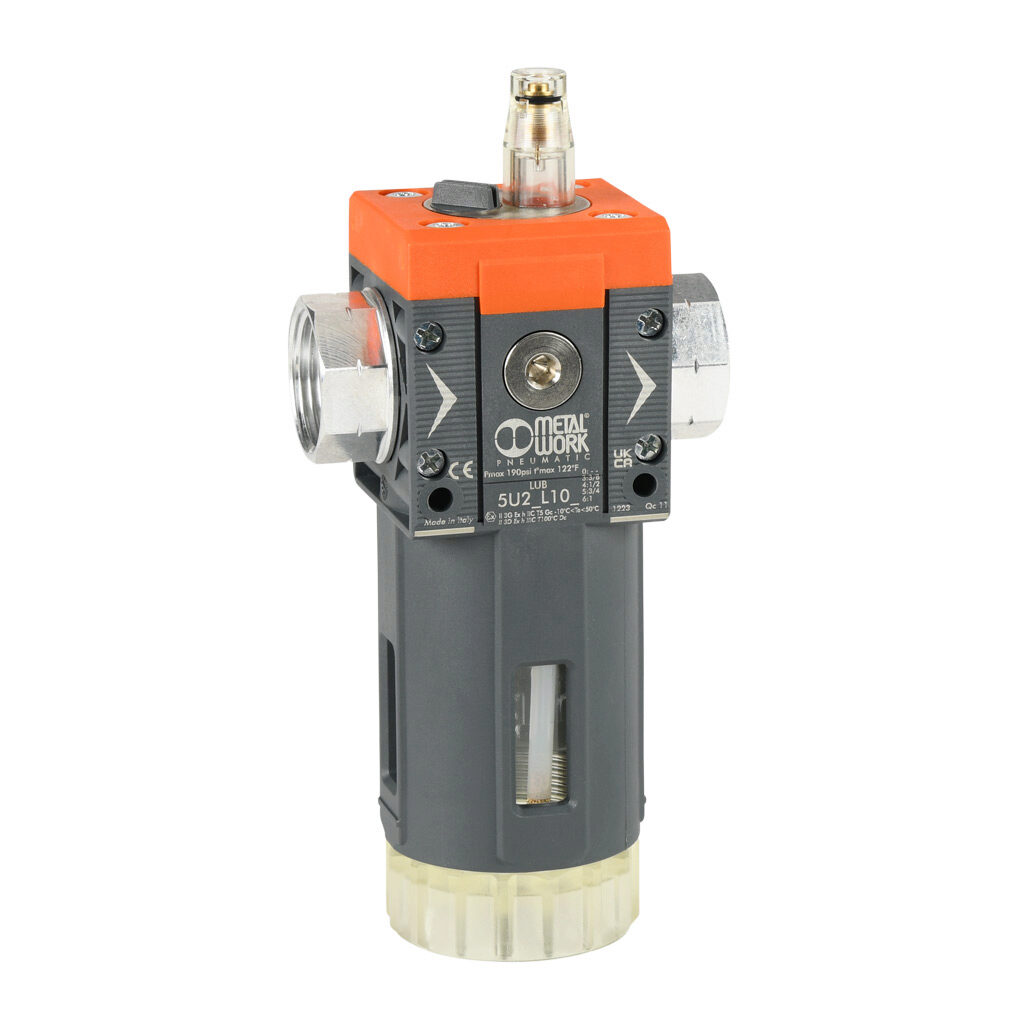
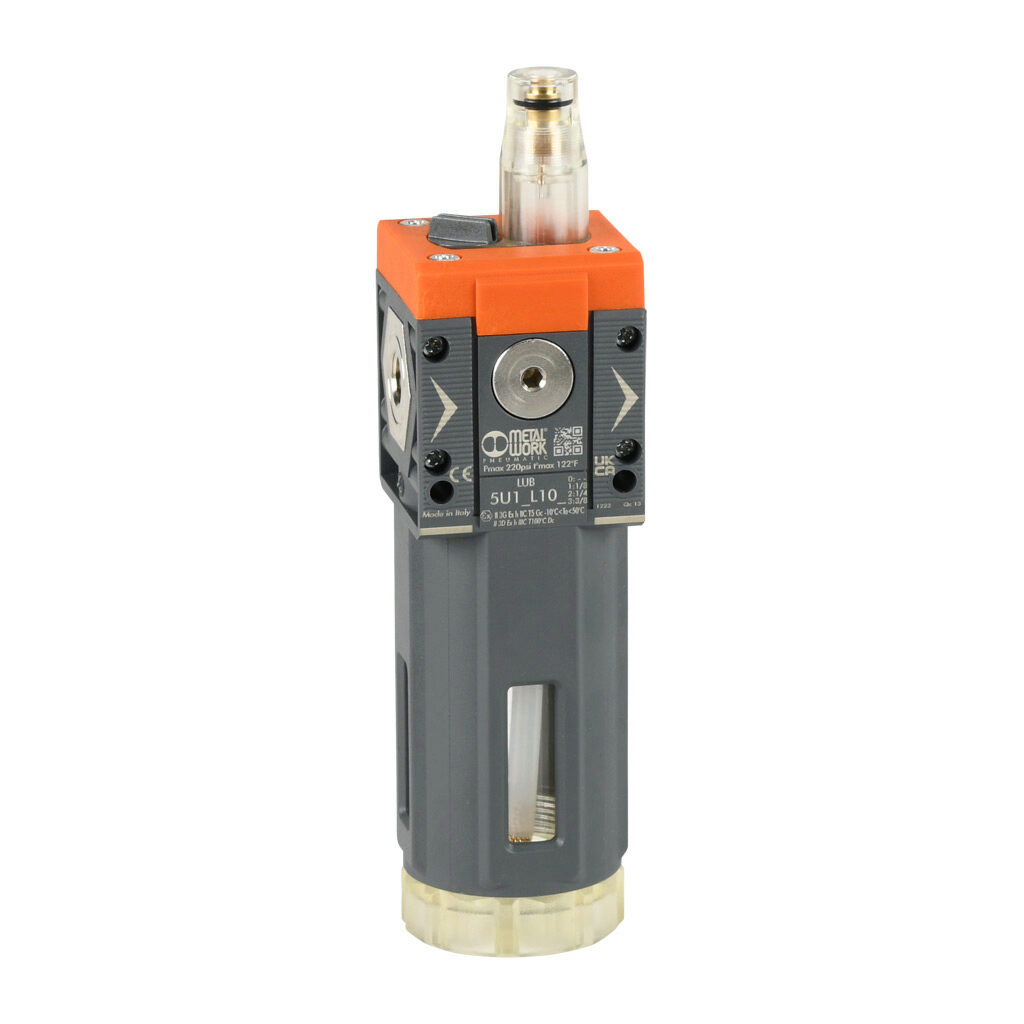
If needed, a lubricator is installed downstream of the regulator. Where lubrication is provided, all downstream pneumatic components will be lubricated. In this case be sure to match the port size of the upstream regulator to maintain proper air flow. Branch an air line from the main supply and use a smaller lubricator if only a few components need lubrication.
You might not need lubrication, really!
Many of today's pneumatic devices don't require lubrication, but high-speed pneumatic power tools often do, so check the manufacturers' recommendations. Devices that do need lubrication typically call for a light-weight non-detergent oil such as SAE 10, ISO VG32, or equivalent, but again - check the manufacturers' specs.
How they work:
A mist-type air lubricator creates a fog of oil vapor via an oil drip, an adjustable needle valve and ejector nozzle, and it should be mounted close to the pneumatic devices to be lubricated. Also note that the oil mist does not travel upwards very well, so mount the lubricator above the components that require lubrication. Route hoses and tubing carefully to avoid creating a 'trap'.
How much?
Lubricators are available in a variety of port sizes to match other air prep components, and the rate of lubrication is adjustable. Due to differing lubrication rates, the bowls are also available in several sizes to store more oil as needed. When the sight gauge indicates low oil level, more oil can be added while the lubricator is pressurized.
Combination Air Prep Units
Combination air prep units come pre-assembled with the most popular component configurations. Models available include manual shut-off with filter/regulator and lubricator, filter/regulator with lubricator, filter with lubricator, and filter with coalescing filter assemblies.


 Safe &
Secure
Safe &
Secure

We accept VISA, MasterCard, Discover, American Express, PayPal or company purchase orders.


 Updating...