


 Loading...


- Barcode / RFID / Vision
- Bulk Wire & Cable
- Cables (Terminated)
- Circuit Protection / Fuses / Disconnects
- Communications
- Drives & Soft Starters
- Enclosure Thermal Management & Lights
- Enclosures & Racks
- Field I/O
- HMI (Human Machine Interface)
- Hydraulic Components
- Motion Control
- Motor Controls
- Motors
- Pneumatic Components
- Power Products (Electrical)
- Power Transmission (Mechanical)
- Process Control & Measurement
- Programmable Controllers
- Pushbuttons / Switches / Indicators
- Relays / Timers
- Safety
- Sensors / Encoders
- Stacklights
- Structural Frames / Rails
- Tools & Test Equipment
- Valves
- Water (Potable) Components
- Wire & Cable Management
- Wire & Cable Termination
- Retired Products
Configuration Utilities
- PLC Family Selector
- P1000 PLC Systems
- P2000 PLC Systems
- P3000 PLC Systems
- ProductivityCODESYS
- CLICK PLC Systems
- Do-more® BRX PLC Systems
- LS-Electric® XGB PLC Systems
- Productivity®Open Systems
- Datalogic® Safety Light Curtains
- LS-Electric® Servo Systems
- Nitra® Pneumatic Grippers
- Object Detection (Sensors)
- PAL Controller Configurator
- Precision Gearbox Selector
- Protos X® Field I/O
- Pyrometers Selector
- Quadritalia® Modular Enclosures
- Stellar® Soft Starters
- Stepper System Selector
- SureFrame T-slot Extrusion
- SureMotion® XYZ Gantry
- SureServo2® System Selector
- SureStep® Linear Actuators
- Timing Belts & Pulleys
- Werma® Stacklights
- ZIPLinks
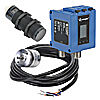

Use our selection assistance tool to narrow your search.
Sensors help automate machines and processes, measuring signals such as position, speed, proximity, pressure, temperature, level, flow, current, and voltage. IO-Link sensors provide communication, configuration, and diagnostics; smart sensors add onboard processing independent of a PLC.

This page will refresh momentarily.
Warning
Some of the selected facets have been selected by the {{ assistanceData.title }} Help.
Resetting/clearing ALL facets will end {{ assistanceData.title }} Help.
![Help icon]() Selection Assistance - {{ assistanceData.title }}
Selection Assistance - {{ assistanceData.title }}
Sensors / Encoders
A common function of a control system is detecting the presence of an object or measuring a process variable. Sensors and sensing technologies are available to satisfy a wide range of usages, environments, and accuracies needed in industrial and commercial applications.
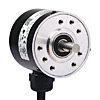
- Encoders convert rotary or linear motion into an electrical signal that can be used for monitoring and/or controlling the position and speed of a moving object. They are especially useful with automotive, medical, printing, and conveying systems.
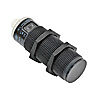
- Proximity sensors are non-contact devices that detect the presence of an object once the object enters the sensor's field. Proximity sensors can utilize sound, infrared radiation (IR), or electromagnetic energy to detect an object.
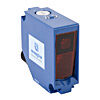
- Photoelectric sensors are also non-contact devices that will detect when its emitted light is interrupted or reflected by an object crossing its path.
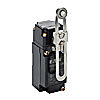
- Limit switches are activated when an object makes physical contact with its actuator.
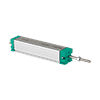
- Linear position sensors detect the position of an object along a linear path.
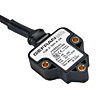
- Inclination sensors monitor the angular displacement of an object.
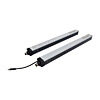
- Light grids use light to detect object presence in wider areas or to detect object height.
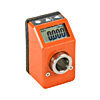
- Position indicators provide a precise reading of the absolute or incremental position of rotating equipment.
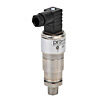
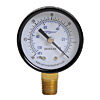
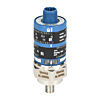
- Pressure sensors and gauges provide reliable measurement of liquid, gas, and air pressures. They are used extensively in pneumatic and hydraulic applications.
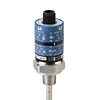
- Temperature sensors and transmitters allow for accurate readings in temperature control and monitoring applications, typically employing thermocouples, RTDs, and thermistors.
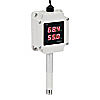
- Humidity sensors provide accurate, real-time data about moisture levels, allowing for the control and maintenance of optimal conditions across various environments.
- Level sensors and controllers monitor and control the amount of product being held in tanks, reservoirs, etc. and offer point level (when the level reaches a specific point) or continuous level sensing.
- Flow sensors measure the amount of fluid passing through them and are able to sense leaks and blockages.
- Vibration detection devices are used to monitor, analyze, and identify vibrations of industrial equipment, which may indicate a malfunction, pending failure, or process restriction.
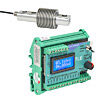
- Weight / force sensors, like load cells, provide reliable measurement of compression, bending, and tension forces and are vital for weighing applications.
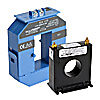
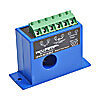
- Current, voltage, and ground fault sensors are used to detect the presence of electrical power or anomalies in electrical circuits before they can cause equipment damage.
- Sensor signal converters and cloud data loggers are also offered and provide in-line signal conversion or data transmission from plant floor sensors/devices to a cloud server.
For part listing and specifications, go to Shop Now
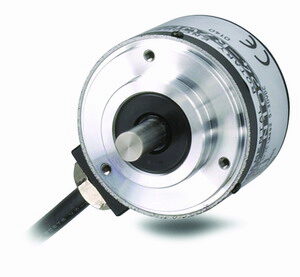
Encoders
Newest Additions!
- Lika Electronic absolute encoders with EtherNet/IP, EtherCAT®, or ModbusTCP/RTU
For motion control applications, use these encoders with PLCs, servos, or Variable Frequency Drives (VFDs) that accept encoder feedback.
- Light duty models are cost-effective choices for light shaft loads in less harsh environments
- Medium duty models offer our best range of capabilities and features
- Heavy duty models have beefy construction and rugged bearings for long service life
- Absolute models provide immediate position data upon power-up, which can eliminate the need for homing
- Absolute models use Gray code or EtherNet/IP, EtherCAT®, ModbusTCP, or ModbusRTU communications options
- Modular kit encoders are ready-made for convenient mounting to stepper motors
- Measuring wheel encoders ride directly on a material or conveyor belt to measure distance or speed
- Draw wire encoders provide accurate linear measuring using a retractable stainless-steel draw wire.
- Accessories include couplings, mounting brackets, bore reducer bushings, replacement measuring wheels, cables & connectors
 Encoders Overview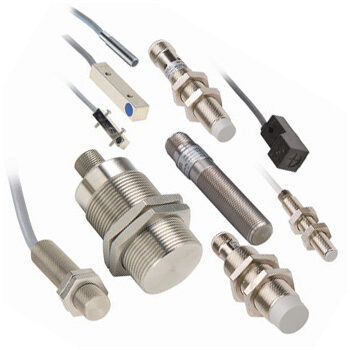
Inductive Proximity Sensors
Newest Additions!
- Contrinex IO-Link smart inductive proximity sensors
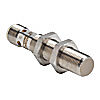
Inductive proximity sensors detect metallic objects. Modern Factor 1 models sense all metals equally. A wide range of specialty models, such as high-pressure, weld-immune, and IP69K, are available, alongside IO-Link and smart sensors for advanced configuration and onboard processing.
Magnetic Proximity Sensors
Newest Additions!
- ProSense MAE1 series magnetic proximity sensors
Magnetic proximity sensors are used for non-contact object detection beyond the normal limits of inductive sensors. Used with a separate damping magnet, they offer very long sensing ranges and can detect magnets through walls of non-ferrous metal, stainless steel, aluminum, plastic, or wood.
Capacitive Proximity Sensors
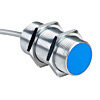
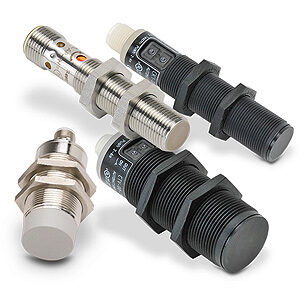
Capacitive sensors detect both metal and non-metal objects, can sense through insulating materials, and are often used to detect fill levels of liquids, pellets, and powders through container walls. They are available in round, tubular, or rectangular shapes, with sensing distances up to 40mm.
Photoelectric Sensors
Newest Additions!
- Contrinex IO-Link smart photoelectric sensors
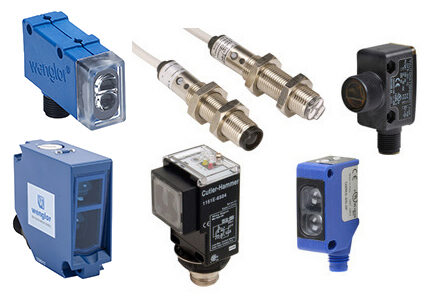
Photoelectric sensors detect presence, distance, or color using light via through-beam, retroreflective, or diffuse sensing modes. Specialized types, such as fiber optic and fork sensors, are also available; certain models offer IO-Link and smart functionality for advanced data and configuration.
Ultrasonic Proximity Sensors
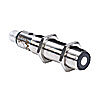
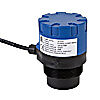
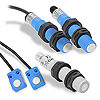
Ultrasonic sensors emit a sound impulse and measure the elapsed time of the echo from an object. They sense most materials and are unaffected by color, transparency, shininess, or lighting conditions. Models are available with discrete or analog outputs, in sensing distances up to 8000mm.
Linear Position Sensors
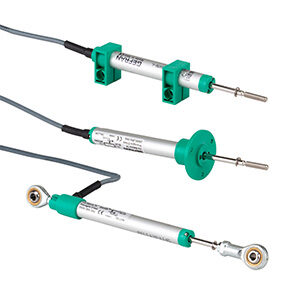
Linear position sensors attach to an object or piece of machinery and translate the linear position to an electrical signal proportional to the linear displacement of the object. Types include:
- Linear potentiometers
- Variable inductance linear transducers
- Magnetostrictive linear position transducers
- Linear measuring wheel encoders
- Draw wire encoders
Inclination Sensors
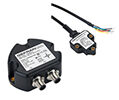
Inclination sensors use MEMS technology to provide reliable tilt angle measurement with respect to gravity. These encapsulated IP67/69K rated sensors are shock and vibration-resistant, suitable for use in the harshest environments.
- Basic inclination sensors with integrated cable
- Fully redundant inclination sensors with M12 cable connection
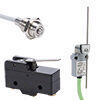
Limit Switches
Limit switches are one of the most common presence sensing devices used in industrial controls, activated when an object makes physical contact with the actuator.
These limit switches feature the most popular actuator styles including:
- Plungers with/without rollers
- Short and adjustable levers with/without rollers
- Steel and plastic rods
- Pull action
Specialty switches include:
- Belt alignment switches
- Heavy-duty cast iron switches
- Precision limit switches
- Snap-action micro switches
- Stopper limit switches
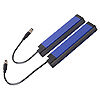
Light Grids
Light grids are multi-beam arrays of photoeyes used to detect presence or measure object height anywhere within the controlled height of the sensor array. They are perfect for detecting various sized and shaped objects passing through the target area. (Not for use as safety light curtains)
- Detection light grids with detection height up to 1580mm
- Measuring light grids with detection height up to 1490mm, blanking function, IO-Link, or analog output
- Accessories
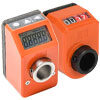
Position Indicators
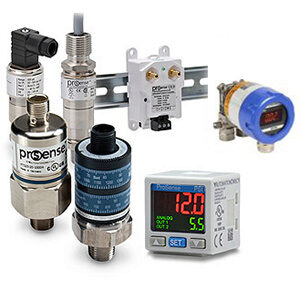
Pressure Sensors
Newest Additions!
- MP Sensor P.Touch series pressure transmitters
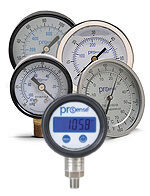
Pressure Gauges & Thermometers
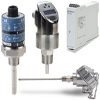
Temperature Sensors & Transmitters
Newest Additions!
- ProSense XTD2/XTH2 series fixed-range temperature transmitters
- WAGO JUMPFLEX® 857 series high density temperature transmitters
- Endress+Hauser iTHERM and iTEMP series temperature transmitters
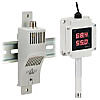
Humidity Sensors
New!
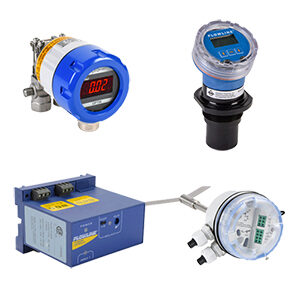
Level Sensors & Controllers
Newest Additions!
- Endress+Hauser FMR series FMCW radar level sensors
- ProSense SBLT series small bore submersible level sensors
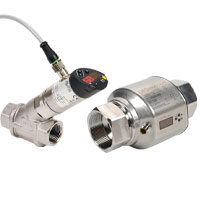
Flow Sensors
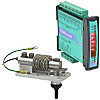
Weight / Force Sensors & Electronics
Vibration Switches & Transmitters
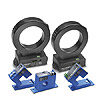
Current & Voltage Sensors (AC & DC)
Newest Additions!
- Sifam Tinsley AC current transformers and DC shunts
- AcuAMP 3VACT series three-phase AC voltage transducers
Current and voltage sensors, used for voltage and current monitoring, logging, or proof-of-operation applications, provide discrete or analog output signals compatible with most PLCs, data loggers, and SCADA systems.
- AC 1- and 3-phase current transducers
- DC current transducers
- AC and DC current switches
- AC current indicator
- AC current transducer and switch combinations
- AC current transformers
- DC current shunts
- AC and DC voltage transducers
- Accessories
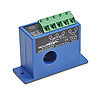
Ground Fault Sensors
Newest Additions!
- Dold RN5883 series residual current monitors
- More AcuAMP GFSL series large aperture ground fault sensors
Ground fault sensors help protect people, products, and processes from damage that can be caused by ground fault conditions.
- Wide range of options
- Selectable trip points ranging from 5 mA to 3A
- Relay outputs with Auto or Manual reset
- Analog voltage output available on select models
- For single- and three-phase systems
- Protect personnel, equipment, and meet regulatory requirements
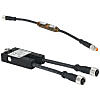
Sensor Signal Converters
New!


 Safe &
Secure
Safe &
Secure

We accept VISA, MasterCard, Discover, American Express, PayPal or company purchase orders.


 Updating...